Ashwagandha Benefits for Stress: What the Research Actually Shows
Ashwagandha has moved from specialist health food shops to mainstream pharmacy shelves in a remarkably short time. If you have looked into ashwagandha benefits, you have probably seen a mix of careful research summaries and claims that go much further than the evidence. This article takes a research-first look at what ashwagandha may do for stress, anxiety, and sleep, where the data is strongest, and what to watch for before trying it.
What Ashwagandha Is and Why People Use It for Stress
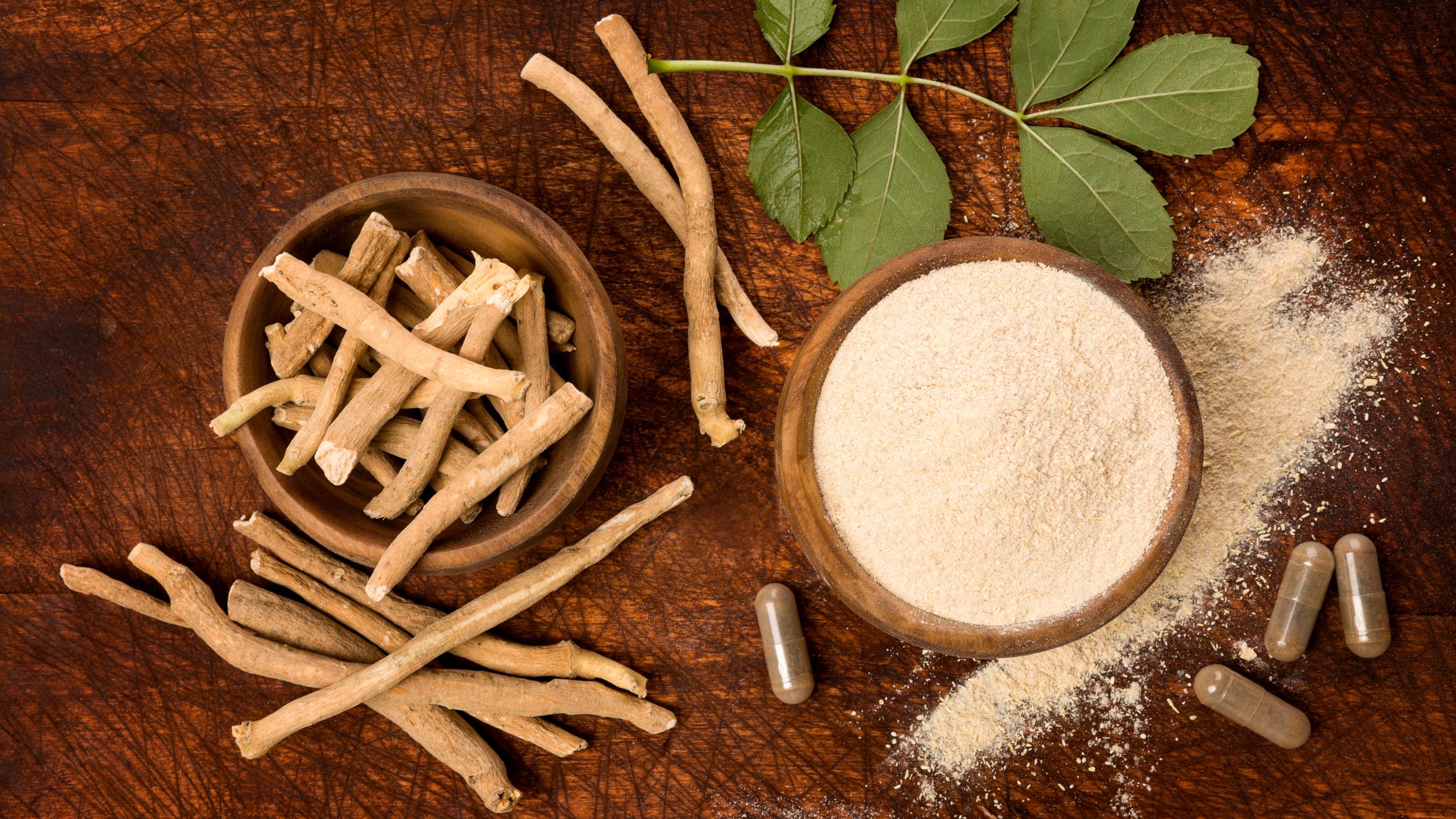
Ashwagandha (Withania somnifera) is a small shrub native to India, North Africa, and parts of the Mediterranean. Its root has been used in Ayurvedic medicine for centuries, often as a rasayana—a restorative tonic associated with resilience and vitality. In modern supplement form, it is usually sold as a root extract standardised to withanolide content, the group of compounds thought to drive many of its effects.
It is often grouped with adaptogens, a term used for plants that may help the body adapt to stress. That label is common in wellness marketing, but it is not a formal medical classification. It describes a proposed effect, not a proven one.
Most people looking at ashwagandha today are hoping for help with stress, anxiety, or sleep. Those are the areas where the research is most developed, even if the evidence still has clear limits.
What the Research Suggests About Ashwagandha and Stress
The most consistent signal for ashwagandha benefits is in perceived stress and self-reported anxiety. Several randomised controlled trials have found that people taking standardised ashwagandha root extract reported lower stress scores than those taking placebo. A frequently cited 2012 trial published in the Indian Journal of Psychological Medicine found significant reductions in Perceived Stress Scale scores after 60 days of supplementation, along with lower morning cortisol in the ashwagandha group.
More recently, a 2019 double-blind, randomised, placebo-controlled trial indexed on PubMed tested a high-concentration ashwagandha root extract at 240 mg/day in adults with self-reported high stress. The ashwagandha group showed statistically significant reductions in anxiety and morning cortisol compared with placebo over eight weeks. The effects were modest, but they were consistent with earlier studies.
It is important to be precise about what these trials measure. They look at self-reported stress and anxiety on validated scales, plus cortisol as a biomarker. They do not prove that ashwagandha treats clinical anxiety disorders. Most studies also exclude people with diagnosed psychiatric conditions, which limits how far the findings can be applied.
Ashwagandha and Sleep
Ashwagandha sleep research is smaller, but it is growing. Several trials have reported modest improvements in sleep onset, sleep quality, and morning alertness. A 2020 study in PLOS ONE found improvements in sleep efficiency and total sleep time in healthy adults and people with mild insomnia after six weeks of supplementation. The mechanism may involve compounds in the root that influence sleep-related pathways, although human mechanistic data are still limited.
If poor sleep is being driven by stress or racing thoughts, it makes sense that a supplement with possible stress-reducing effects could also help sleep. Still, it is hard to separate those effects cleanly in studies that measure both.
How Ashwagandha May Work in the Body
Several mechanisms have been proposed. The most discussed involves the hypothalamic-pituitary-adrenal (HPA) axis, the hormonal system that helps regulate the cortisol stress response. Animal studies and some human research suggest withanolides may influence HPA activity, which could help explain the cortisol changes seen in trials.
Other proposed pathways include effects on GABAergic neurotransmission, which would be relevant to anxiety and sleep, as well as anti-inflammatory activity. These are interesting possibilities, but most of the mechanistic research is preclinical. In other words, the explanations are plausible, but not fully established in humans.
Practically speaking, the research suggests that something is happening in stressed adults who take ashwagandha extract. What researchers do not yet have is a complete picture of why.
What the Evidence Does Not Prove
This is the part that supplement marketing often skips. A few important caveats:
-
Most trials are short. Many last only eight to twelve weeks, so there is little evidence on long-term daily use.
-
Sample sizes are small. A lot of studies include fewer than 100 participants, which makes larger, independently funded trials important.
-
The study populations are narrow. Most participants are healthy adults with elevated stress, not people with diagnosed anxiety disorders or depression.
-
Publication bias may be a factor. Positive studies are more likely to appear in the literature than null results.
-
Products vary widely. Root versus leaf extract, standardisation, and manufacturing quality can differ a lot from one brand to another.
That does not mean ashwagandha is ineffective. It means the evidence supports cautious optimism, not certainty.
Forms, Doses, and Product Quality
Most clinical trials have used root extract standardised to roughly 1.5% to 5% withanolides, at doses ranging from about 240 mg to 600 mg per day. Some proprietary extracts, including KSM-66 and Sensoril, have been studied more often than others, which makes them easier to compare with published research. Generic powders or products without clear standardisation are harder to evaluate.
When choosing a product, look for:
- Third-party testing or certification such as NSF, Informed Sport, or an equivalent standard
- Clear withanolide content on the label
- Root extract rather than leaf extract for stress and sleep use, since most research uses root
- Transparent labelling without proprietary blends that hide ingredient amounts
Timing matters less than consistency. Most trials use once- or twice-daily dosing with food, often split between morning and evening. There is no strong evidence that a specific time of day makes a major difference, though taking it with a meal may reduce digestive discomfort.
Ashwagandha Side Effects and Safety Considerations
At standard doses, ashwagandha is generally well tolerated in clinical trials. The most common side effects are gastrointestinal: mild nausea, loose stools, or stomach discomfort, especially when taken on an empty stomach. These effects are usually temporary.
There are also more serious safety concerns to keep in mind, particularly around liver health. Medical case reports have linked ashwagandha supplement use with hepatotoxicity, or liver injury, although these cases are rare and do not always prove causation. The UK’s Medicines and Healthcare products Regulatory Agency (MHRA) has flagged these reports. That is one reason to avoid exceeding recommended doses and to watch for symptoms such as unusual fatigue, jaundice, or upper abdominal pain.
Potential drug interactions include:
-
Thyroid medications: Ashwagandha may increase thyroid hormone levels, so people taking thyroid medication should monitor levels carefully and speak with their prescriber.
-
Sedatives and CNS depressants: There may be additive sedative effects.
-
Immunosuppressants: Ashwagandha may have immunomodulatory activity, which could theoretically interfere with these drugs.
-
Antidiabetic medications: Some evidence suggests ashwagandha may lower blood glucose, which could add to the effect of diabetes medication.
These are not automatic reasons to avoid it, but they are good reasons to speak with a clinician if you take regular medication.
Who Should Avoid Ashwagandha or Talk to a Clinician First
Certain groups should be cautious or avoid ashwagandha unless they have medical guidance:
-
Pregnant people: Ashwagandha has traditionally been used to stimulate uterine contractions, and safety concerns remain in pregnancy.
-
People with autoimmune conditions: Including rheumatoid arthritis, lupus, Hashimoto’s thyroiditis, or multiple sclerosis.
-
People with thyroid disorders: Especially hyperthyroidism or anyone taking thyroid medication.
-
People with hormone-sensitive cancers: Caution is sensible until more is known.
-
People with pre-existing liver conditions: The liver injury case reports make this a group that should be especially careful.
-
Children and adolescents: There is not enough safety data in younger people.
If you are in any of these groups and still want to explore ashwagandha, a pharmacist or GP is a sensible first step. It takes about five minutes to get personalised guidance through CarePlus, which can help you prepare the right questions before that conversation.
Putting Ashwagandha in Context: It Is Not a Substitute for Lifestyle
One thing clinical trials do not answer is whether ashwagandha works better than, or even as well as, established stress-management approaches such as regular physical activity, adequate sleep, reduced alcohol intake, and evidence-based psychological therapies like CBT. There are no strong head-to-head comparisons, largely because supplement research is usually designed around placebo rather than comparative effectiveness.
The honest view is that ashwagandha may be a useful addition for some people with stress-related symptoms, but it is not a replacement for addressing the source of the stress or building sustainable habits. Exploring a personalised wellness plan through CarePlus can help you look at the full picture, not just one supplement. Likewise, understanding your overall supplement and nutrition baseline with CarePlus means you are not treating ashwagandha in isolation.
Frequently Asked Questions
Does ashwagandha really help with stress?
Several small to medium randomised controlled trials suggest it can reduce self-reported stress and anxiety scores compared with placebo, with some evidence of lower cortisol levels. The effect appears real but modest, and most studies last only eight to twelve weeks. It is not a cure for stress, but it may help as part of a broader plan.
How long does ashwagandha take to work?
Most trials show measurable effects after four to eight weeks of consistent daily use. It is not an immediate-acting supplement. If you have not noticed a change after eight weeks at a standard dose, it may simply not be the right fit for you.
What are the side effects of ashwagandha?
The most common side effects at standard doses are mild digestive symptoms such as nausea, loose stools, or stomach discomfort, especially when taken without food. Rare but more serious concerns include liver injury, which has been described in case reports. If you notice unusual fatigue, yellowing of the skin or eyes, or upper abdominal pain while taking ashwagandha, stop use and seek medical advice promptly.
Who should not take ashwagandha?
Pregnant people should avoid it. People with autoimmune conditions, thyroid disorders, hormone-sensitive cancers, liver conditions, or those taking immunosuppressants, thyroid medication, sedatives, or blood glucose-lowering drugs should speak with a clinician first. Children and adolescents should not take it without medical guidance.
Can ashwagandha help with sleep?
There is a modest evidence base suggesting it may improve sleep quality, sleep onset, and morning alertness, especially in people whose sleep is affected by stress. The benefits seen in trials are positive but small. It is unlikely to solve sleep problems caused by other issues, such as sleep apnoea or pain, and it should not replace proper assessment of ongoing insomnia.