Iodine Deficiency Symptoms: The Silent Problem Affecting Millions Across Europe
Iodine deficiency is one of those health issues that can be easy to miss. It rarely causes one dramatic, unmistakable sign. More often, it shows up as a cluster of subtle changes: tiredness that sleep doesn’t fix, brain fog, feeling cold more often, or gradual changes in weight and energy. For many people across Europe, iodine deficiency symptoms are present but unrecognised, and they’re often mistaken for stress, ageing, or a busy lifestyle. This guide explains what iodine does, why deficiency still happens in Europe, who is most at risk, and how to improve intake safely without jumping straight to supplements.
What Iodine Does in the Body
Iodine is a trace mineral, which means the body only needs a small amount of it — but that small amount is essential. Its main role is to help the thyroid gland make thyroid hormones: thyroxine (T4) and triiodothyronine (T3). These hormones help regulate metabolism, body temperature, heart rate, and how the body turns food into energy. When iodine intake is too low, thyroid hormone production can fall, and that slowdown can affect many parts of the body.
The need for iodine becomes even more important during pregnancy and early childhood. Thyroid hormones are critical for fetal brain development, and severe deficiency in pregnancy can have lasting effects on a child’s growth and cognitive development. Even milder deficiency may matter, which is why iodine intake is taken seriously in prenatal care.
Outside pregnancy, iodine also supports day-to-day thyroid health, skin renewal, and normal energy levels.
Why Iodine Deficiency Still Occurs in Parts of Europe
It may seem surprising that iodine deficiency still exists in countries with abundant food supplies, but several factors help explain it.
First, iodine is not evenly distributed in soil or food. Coastal diets have traditionally provided more iodine through seafood and seaweed, while inland and mountainous areas — including parts of Central Europe, Scandinavia, and the Alpine region — have naturally lower iodine levels in soil. That means local crops, and even animal products from those areas, may contain less iodine.
Second, iodised salt is not used consistently across Europe. Some countries require it, others recommend it, and in many households, specialty salts such as sea salt or Himalayan salt have replaced standard table salt. Those salts usually contain little to no iodine. At the same time, public health advice to reduce salt intake can unintentionally reduce iodine intake if people are not getting iodine from other foods.
Third, eating habits have changed. Dairy products, especially milk, are an important iodine source in many European diets. As more people choose dairy-free or plant-based diets, they may lose a major source of iodine unless they replace it deliberately.
According to information reviewed by the European Food Safety Authority (EFSA), iodine intake remains inadequate in several European population groups, with pregnant women and adolescents often identified as higher risk. In other words, iodine deficiency Europe is still a real public health issue, not just a historical one.
Common Iodine Deficiency Symptoms in Adults
The challenge with low iodine symptoms is that they overlap with many other conditions. Fatigue could be related to poor sleep, anaemia, stress, depression, or thyroid problems. That’s why iodine deficiency can be missed for so long. Still, there are patterns that are worth paying attention to.
Fatigue and Low Energy
When thyroid hormone production drops, metabolism slows down. People often describe the tiredness as heavy, flat, or foggy rather than simply sleepy. It may not improve much with rest.
Unexplained Weight Gain
A slower metabolism can make it easier to gain weight gradually, even when diet and activity haven’t changed much. Some people also find it harder than usual to lose weight.
Feeling Cold
Thyroid hormones help regulate body temperature. If levels are low, you may feel colder than usual or notice that you’re uncomfortable in settings that others find warm enough.
Brain Fog and Poor Concentration
Difficulty focusing, slower thinking, and memory lapses can all happen when thyroid function is affected. These symptoms are not specific to iodine deficiency, but they can be part of the picture.
Swelling in the Neck (Goitre)
If the thyroid gland is not getting enough iodine, it may enlarge in an effort to capture more. This can appear as a swelling at the base of the neck, known as a goitre. It usually develops over time and is more likely with longer-standing or more severe deficiency.
Dry Skin and Hair Thinning
When thyroid function slows, skin may become dry or rough, and hair can become brittle, thin, or shed more than usual.
None of these signs confirms iodine deficiency on its own. They’re a reason to think about thyroid health and discuss symptoms with a clinician, not a reason to start high-dose supplements without guidance.
Iodine Deficiency in Pregnancy and Children
Pregnancy increases iodine requirements, sometimes quite significantly. The developing baby depends on the mother’s iodine supply, and the mother’s thyroid has to work harder too. A deficiency that causes no obvious symptoms outside pregnancy can become much more important during this time.
Iodine deficiency in pregnancy has been linked with a higher risk of miscarriage, preterm birth, and impaired cognitive development in the child. These risks are one reason prenatal iodine intake matters so much. If you are pregnant or planning a pregnancy, it’s sensible to ask your midwife, obstetrician, or GP whether your diet and prenatal supplement provide enough iodine.
In children, iodine deficiency can affect growth and brain development. School-age children with low iodine intake may struggle more with attention or learning, although these issues are not specific to iodine alone. This is why iodine intake is considered important for child health as well as thyroid health.
Who Is Most at Risk of Iodine Deficiency in Europe?
Anyone can develop iodine deficiency, but some groups are more vulnerable than others:
-
Pregnant and breastfeeding women — iodine needs are higher, and the consequences of low intake can affect both mother and baby.
-
People following plant-based or vegan diets — if dairy and seafood are excluded, iodine intake can fall unless other sources are included deliberately.
-
People who avoid dairy because of intolerance, allergy, or preference — dairy is a major iodine source in many European diets.
-
People living in inland or mountainous areas — local soil tends to contain less iodine, which can affect food supply.
-
People who use only non-iodised salt — sea salt, Himalayan salt, and many specialty salts contain little or no iodine.
-
Adolescents, especially girls — dietary patterns and growth needs can increase the risk of low intake.
How Iodine Status Is Assessed
There is no single perfect test for iodine status in an individual. Urinary iodine concentration is often used in population studies, but one urine sample can vary too much to be a reliable stand-alone test for a person. Blood tests such as TSH, T3, T4, and thyroid antibodies can show whether thyroid function is affected, but they do not directly measure iodine intake.
If you’re concerned about iodine, the best first step is to speak with your GP or another qualified clinician. They can review your diet, consider your risk factors, and decide whether thyroid testing is appropriate. Symptoms alone are not enough to diagnose iodine deficiency, and self-treating with supplements can create new problems.
Not Sure Where to Start?
CarePlus offers a personalised wellness assessment that takes about 5 minutes to complete. It helps identify nutritional gaps — including iodine intake — based on your diet, lifestyle, and health goals, and connects you with evidence-based guidance tailored to you. If you’re worried about iodine intake, speak with a healthcare professional before starting supplements.
Iodine-Rich Foods: How to Improve Intake Through Diet
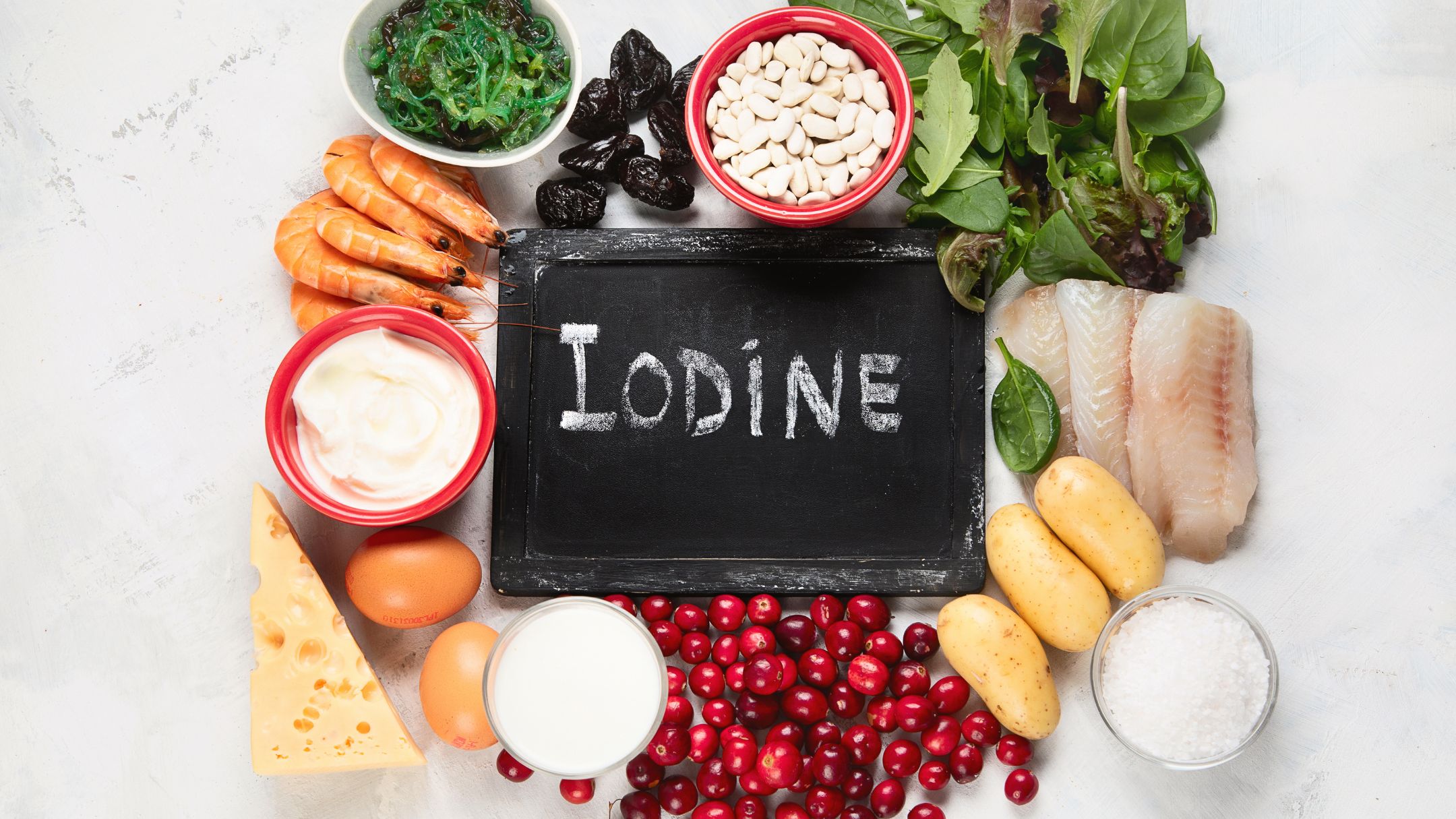
For most people, food is the safest place to start. If you do not have a diagnosed deficiency, improving intake through diet is usually the most practical approach. These are some of the most reliable iodine rich foods available in Europe:
Seafood
White fish such as cod and haddock, along with shellfish, are among the richest dietary sources of iodine. Oily fish such as salmon also contribute, though usually in smaller amounts. If you eat fish, including it a couple of times a week can help support iodine intake.
Dairy Products
Milk, yoghurt, and cheese can make a meaningful contribution to iodine intake in European diets. The iodine content can vary by season and farming practices, but dairy remains one of the most reliable sources for many people.
Eggs
Eggs contain iodine, mainly in the yolk. The amount depends partly on the hens’ feed, but eggs can still be a useful source if you eat them regularly.
Seaweed
Seaweed can be very high in iodine — sometimes extremely high. Nori is generally a more moderate option and may suit plant-based diets better. Kelp and other brown seaweeds can contain enough iodine to push intake above safe levels if eaten often, so they should be used cautiously.
Iodised Salt
Where it is available, iodised table salt is a simple way to increase iodine intake. That said, it should not be used as a reason to eat more salt overall. The goal is to choose iodised salt when you are already using salt, not to increase sodium intake.
When Supplements May Help — and When Too Much Iodine Is Harmful
Iodine supplements can be useful in specific situations, especially for pregnant or breastfeeding women who are not meeting needs through food, and for people with very restricted diets that exclude both dairy and seafood. Many prenatal supplements include iodine, so it’s worth checking the label.
But iodine is one of those nutrients where more is not better. Too much iodine can disrupt thyroid function and may worsen both underactive and overactive thyroid conditions in susceptible people. This is especially important for anyone with Hashimoto’s thyroiditis, Graves’ disease, or another thyroid disorder.
High-dose iodine supplements marketed for general wellness are not supported by strong evidence for people who already get enough iodine from food. For most healthy adults, a varied diet that includes iodine-containing foods is the safer starting point.
The practical takeaway is simple: if you’re worried about intake, get advice before starting supplements. A clinician can help you decide whether you need testing, a dietary change, or a supplement that fits your situation.
Frequently Asked Questions
What are the first signs of iodine deficiency?
The first signs are often subtle: fatigue, feeling cold, and difficulty concentrating are common early clues. Because these symptoms overlap with many other conditions, they are easy to overlook. A visible goitre usually appears later, if deficiency continues. If symptoms persist, it’s worth discussing thyroid testing with your GP.
Is iodine deficiency common in Europe?
Yes, it remains common in some groups and regions. Rates vary by country, but pregnant women, adolescents, and people who avoid dairy or seafood are often at higher risk. Salt iodisation policies and dietary habits make a big difference from one country to another.
Which foods are highest in iodine?
Seaweed, white fish such as cod and haddock, shellfish, milk, yoghurt, and eggs are among the highest iodine foods in European diets. Iodised salt can also help where it is used. Plant foods are generally less reliable because their iodine content depends heavily on soil levels.
Can you take too much iodine?
Yes. Excess iodine can interfere with thyroid function and may trigger problems in people with existing thyroid conditions. Very high-iodine seaweeds, especially kelp, and high-dose supplements are the main concerns. It’s best not to take large amounts without medical advice.
Who is most at risk of iodine deficiency?
Pregnant and breastfeeding women are at the highest risk, followed by people on vegan or dairy-free diets, those who use only non-iodised salt, adolescents, and people living in inland or mountainous areas. Risk is higher when several of these factors overlap.