Calcium: How Much You Need and Where It Should Come From
Knowing how much calcium do you need can seem simple at first, but the answer depends on age, life stage, diet, medications, and health conditions. Calcium is the body’s most abundant mineral and plays a role in bone strength, muscle contraction, nerve signalling, and normal blood clotting. Most people should think about calcium as part of an overall food-first pattern, not as a single number to chase. This guide explains what calcium does, the main calcium food sources, what affects calcium absorption, and when it makes sense to speak with a clinician or pharmacist before considering supplements.
What Calcium Actually Does in the Body
About 99% of the body’s calcium is stored in bones and teeth, where it helps provide structure. The remaining 1% is found in blood and soft tissues, where it supports muscle function, nerve transmission, and blood clotting. The body keeps blood calcium within a narrow range, so if intake is too low over time, it can draw on bone stores to maintain that balance.
That is why a normal blood calcium result does not necessarily mean your dietary intake is ideal. Bone health depends on steady intake over time, not a single test result.
How Much Calcium Do You Need? Why the Answer Varies
Reference intakes vary by country, age, sex, and life stage, and they are meant as population-level guides rather than personal prescriptions. The NHS advises that most adults need around 700 mg of calcium per day, with higher needs during adolescence and breastfeeding. The NHS calcium guidance also notes that 1,500 mg per day is the upper safe limit for supplemental calcium from all sources combined, not a target to aim for.
Needs change across the lifespan:
-
Children and adolescents: Calcium supports rapid bone growth during these years, when much of peak bone mass is built.
-
Adults aged 19–50: Needs are generally lower than in adolescence, but regular intake still matters for maintaining bone health.
-
Older adults: Calcium absorption may become less efficient with age, and bone loss becomes more common, especially after menopause.
-
Pregnancy and breastfeeding: Needs can change, so it is best to discuss calcium and vitamin D intake with a midwife, doctor, or pharmacist rather than adjusting supplements on your own.
Other factors also matter. Gut health, kidney function, vitamin D status, and some medications can affect how much calcium is absorbed or retained. That is why supplement decisions are best made with a clinician or pharmacist, especially when more than one health factor is involved.
Calcium Food Sources: Building Intake Through Diet
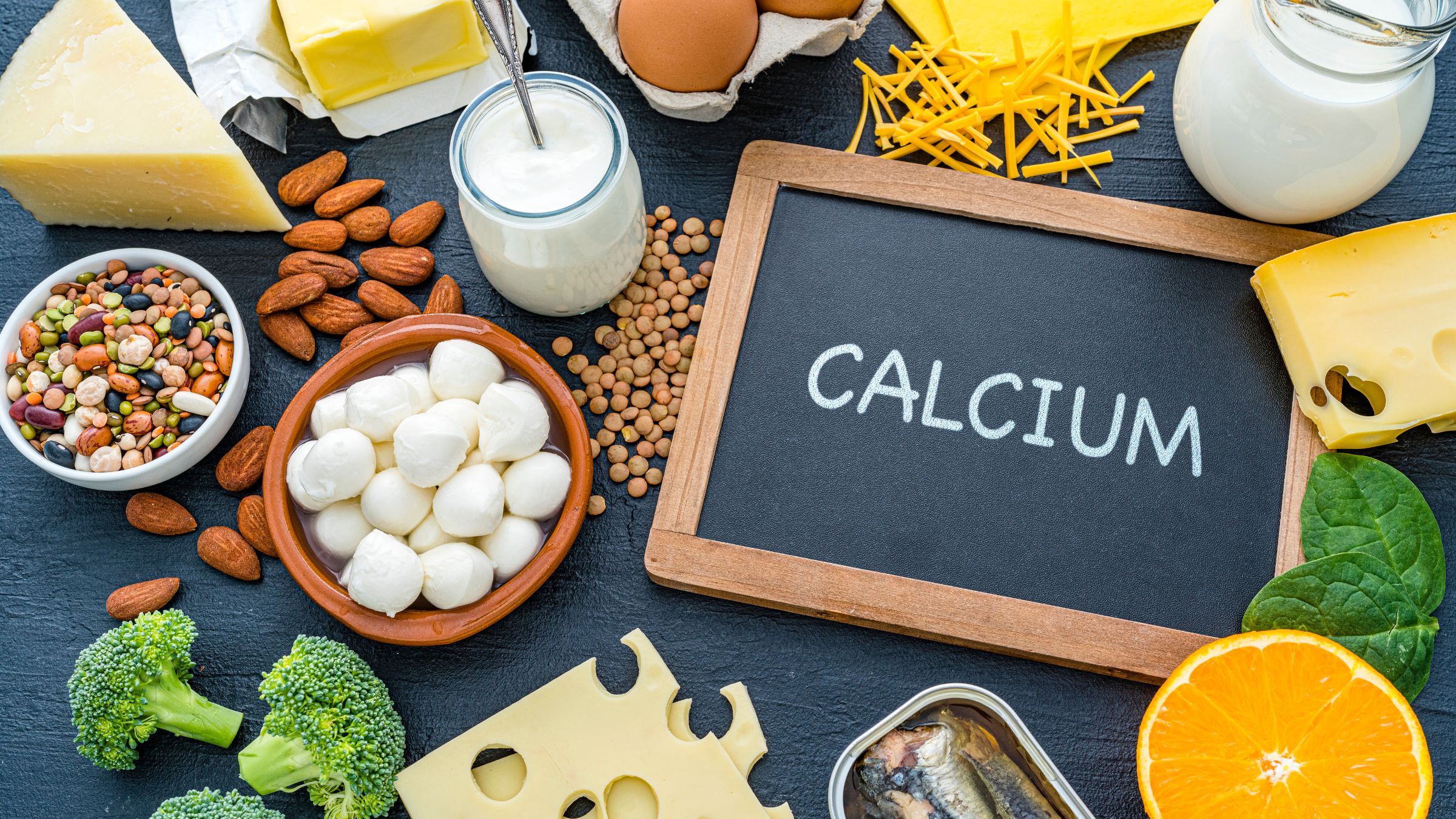
A food-first approach is usually the most practical place to start. Calcium-rich foods often bring along other useful nutrients, and fortified foods can help fill gaps without relying on supplements. Here are some of the most reliable calcium food sources:
Dairy and Dairy Alternatives
-
Milk (whole or semi-skimmed): Around 240–280 mg per 200 ml glass.
-
Plain yoghurt: Roughly 200–250 mg per 150 g serving.
-
Hard cheese (for example, Cheddar or Parmesan): About 200–250 mg per 30 g portion.
-
Fortified plant milks (oat, soy, almond): Often around 120–240 mg per 200 ml, but check the label because fortification varies.
Non-Dairy Sources
-
Canned fish with edible bones, such as sardines or salmon: A strong source, with around 240–300 mg per 100 g serving.
-
Calcium-set tofu: Some products provide more than 300 mg per 100 g. Check the label for calcium sulphate (E516).
-
Dark leafy greens such as kale, bok choy, and broccoli: Useful contributors, although spinach and Swiss chard are less efficient sources because of their oxalate content.
-
Fortified cereals and bread: These can add up across the day, especially if you eat them regularly.
-
Almonds, white beans, and chickpeas: Smaller contributions, but still helpful as part of a varied diet.
If you are not sure whether your current diet is covering your needs, a few days of food tracking in a reputable app can give you a clearer picture before you think about supplements.
What Affects Calcium Absorption?
Getting enough calcium is only part of the picture. How well you absorb it depends on several practical factors.
Vitamin D
Vitamin D is important for calcium absorption in the gut. Without enough vitamin D, calcium may not be used as efficiently. The NHS recommends that adults in the UK consider a daily vitamin D supplement of 10 micrograms (400 IU) during autumn and winter, when sunlight is not strong enough for the skin to make enough vitamin D. If you are unsure about your vitamin D status, speak with your GP or a clinician about whether testing is appropriate. For a broader look at nutrient overlap, see our guide to vitamins for energy and fatigue.
Dose and Timing
Calcium is absorbed more efficiently in smaller amounts spread across the day than in one large serving. That matters most with supplements, but it can also help to include calcium-rich foods at different meals. For more on timing and absorption, see our complete guide to taking vitamins with food.
Phytates and Oxalates
Some plant compounds, including phytates in wholegrains and legumes and oxalates in spinach and rhubarb, can reduce how much calcium is absorbed from those foods. That does not mean avoiding them. It simply means that not all calcium sources are absorbed equally well, and foods like kale or dairy are generally more efficient sources.
Interactions With Other Supplements
Calcium can reduce the absorption of iron and zinc when taken at the same time in supplement form. This matters if you are managing iron deficiency or taking several supplements. Our article on vitamins that should not be taken together covers this in more detail.
When Calcium Supplementation Might Be Considered
Supplements are not always needed. If your diet already provides enough calcium, adding more may not offer extra benefit and can make total intake harder to track. Still, a clinician may discuss supplementation in situations such as:
- Low bone density, including osteopenia or osteoporosis
- Diets with limited dairy and few fortified alternatives
- Malabsorption conditions such as coeliac disease or Crohn’s disease
- Long-term use of medicines that may affect calcium balance or absorption
- Postmenopause, when bone health is often reviewed more closely
In each case, the key question is total intake from food and supplements combined. A clinician or pharmacist can help review that safely.
Calcium Supplement Safety: What You Need to Know Before Starting
This section matters because calcium supplements are not risk-free, especially when kidney health, medications, or total intake are part of the picture.
Kidney Conditions
People with chronic kidney disease (CKD) or a history of kidney stones, especially calcium oxalate or calcium phosphate stones, should not start or change calcium supplements without guidance from a nephrologist, GP, or pharmacist. The kidneys help regulate calcium excretion, and impaired kidney function changes the safety picture.
Cardiovascular Considerations
Research on whether higher supplemental calcium intake is linked with cardiovascular risk has been mixed, and the evidence is not settled. A 2019 review in PubMed-indexed literature noted that calcium from food does not appear to raise the same concerns seen in some studies of supplements. This is another reason to prefer food first and to review supplements with a clinician rather than self-prescribing.
Medication Interactions
Calcium supplements can affect the absorption of some medicines, including levothyroxine, tetracycline and fluoroquinolone antibiotics, and bisphosphonates used for osteoporosis. If you take regular medication, ask a pharmacist before starting calcium so you can check both safety and timing.
Total Intake from All Sources
It is easy to underestimate calcium from food, fortified products, and existing supplements. Too much calcium over time can contribute to hypercalcaemia, which may cause nausea, constipation, kidney problems, and other symptoms. That is why total intake should be reviewed as a whole before adding a new supplement.
Frequently Asked Questions
How much calcium do you need each day?
It depends on age, sex, and life stage. The NHS advises around 700 mg per day for most adults, with higher needs during adolescence and breastfeeding. These are general reference values, not personal prescriptions. Diet, medications, kidney function, and vitamin D status can all change what is appropriate for you, so a personalised review is more useful than a one-size-fits-all answer.
What foods are highest in calcium?
Dairy foods, calcium-set tofu, canned fish with edible bones, and fortified plant milks are among the strongest sources. Dark leafy greens such as kale and broccoli also contribute. Spinach is less efficient because its oxalate content reduces absorption. Spreading calcium-rich foods across meals can help support overall intake.
Is it better to get calcium from food or supplements?
For most people, food is the preferred source. It is easier to fit into daily eating patterns, and it comes with other nutrients that support bone health. Supplements may be useful when intake from food is clearly low or when a clinician recommends them for a specific reason, but they should be reviewed in the context of total intake and health history.
Can you take calcium with other vitamins?
Calcium can reduce the absorption of iron and zinc when taken at the same time in supplement form, so spacing them apart is often sensible. Vitamin D supports calcium absorption and is commonly discussed alongside it. If you take regular medication, ask a pharmacist before combining supplements.