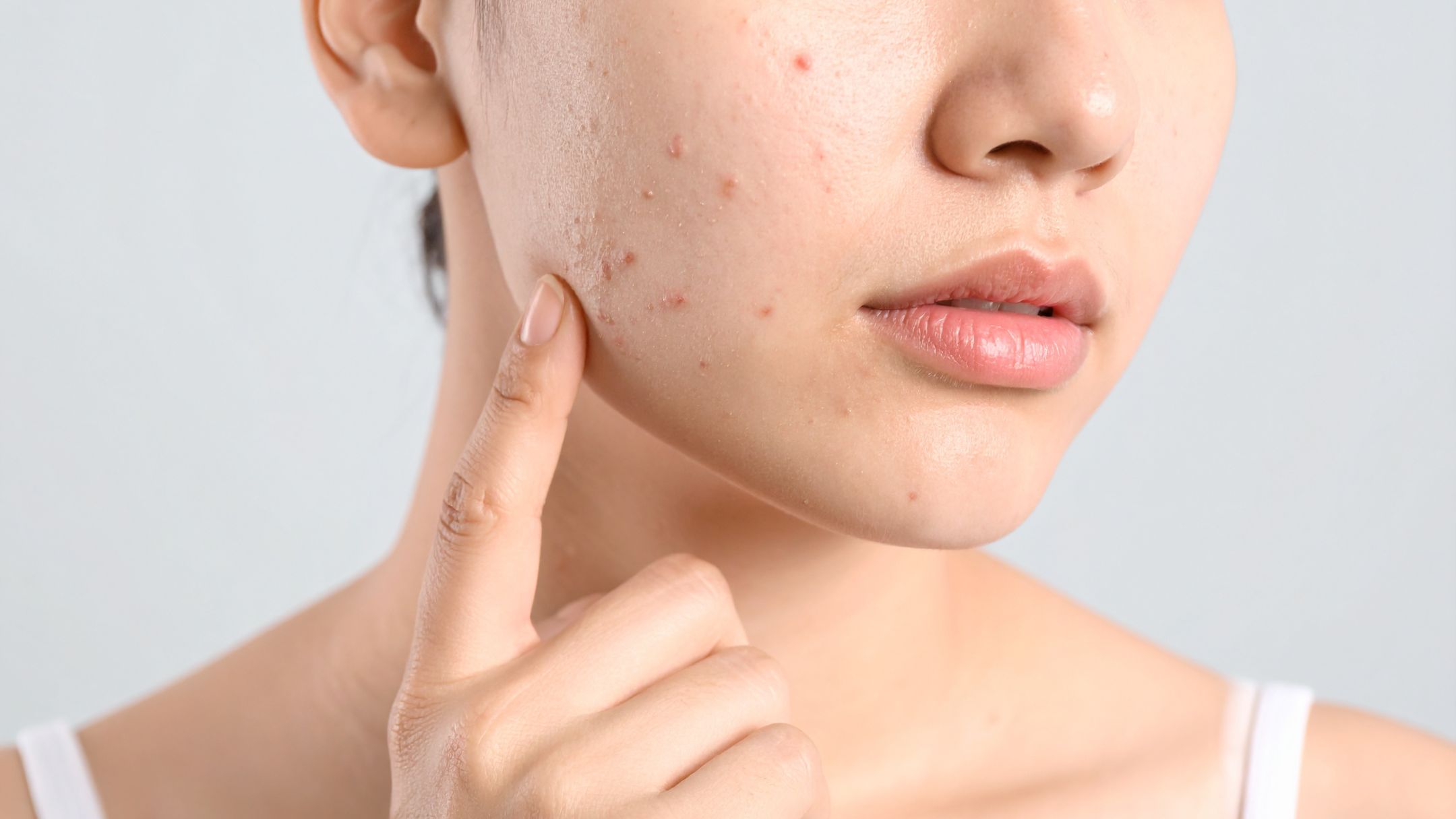
Vitamins for Hormonal Acne: What Helps From the Inside
If your breakouts cluster around your jaw, chin, or lower cheeks, flare in the week before your period, or seem stubbornly resistant to every cleanser you try, hormonal acne is a reasonable suspect. Vitamins for hormonal acne get searched constantly, and for good reason: certain nutrients may support skin health from the inside. But support is the key word. Supplements are not a stand-alone fix, and the evidence behind most acne vitamins is still evolving. Here’s a grounded look at what may help, when a deficiency matters, and what to avoid.
What Hormonal Acne Actually Is
Hormonal acne is driven mainly by androgens — testosterone and related hormones — which can increase sebum production. More sebum creates a better environment for Cutibacterium acnes (formerly Propionibacterium acnes) to grow inside blocked follicles, which then leads to inflammation. That is why hormonal breakouts often feel deeper, more tender, and more cystic than surface-level congestion.
Androgen shifts can happen across the menstrual cycle, during perimenopause, with polycystic ovary syndrome (PCOS), or during periods of ongoing stress. That is also why hormonal breakouts are not just a teenage issue — many adults deal with them well into their 30s and 40s.
Supplements cannot switch off androgen activity or “balance hormones” in a dramatic clinical sense. What they can do is help correct a deficiency, support inflammation control, or improve factors such as insulin sensitivity. That is useful, but it is not the same as treatment.
Nutrients That May Matter for Hormonal Acne
Zinc
Zinc is the most studied mineral in acne care, and it has a plausible role. It supports immune function, has anti-inflammatory effects, and may help reduce the activity of 5-alpha-reductase, the enzyme that converts testosterone into dihydrotestosterone (DHT). Several small trials suggest that zinc supplementation can modestly reduce acne severity.
The National Institutes of Health Office of Dietary Supplements notes that zinc deficiency can affect skin integrity and immune function. That matters because low zinc intake is more likely in people eating very little meat or following a poorly planned plant-based diet. Food sources include oysters, beef, pumpkin seeds, and legumes.
If you do supplement, zinc gluconate and zinc picolinate are commonly used forms. The adult upper limit is 40 mg per day; taking more will not speed up results and may cause nausea or interfere with copper absorption over time.
Vitamin D
Vitamin D deficiency is common, especially in people with limited sun exposure or darker skin tones. Its link to acne is indirect but biologically plausible: vitamin D receptors are present in skin cells, and the vitamin plays a role in immune regulation. Some studies have found lower vitamin D levels in people with acne, although that does not prove cause and effect.
If you suspect low vitamin D, testing first is the most sensible step. A blood test can show whether you are deficient, insufficient, or in range. If deficiency is confirmed, your clinician may recommend a daily supplement or a higher short-term dose depending on how low your level is.
Omega-3 Fatty Acids
Omega-3s — especially EPA and DHA from oily fish and algae — are known for their anti-inflammatory effects. Since inflammation is central to acne, it makes sense that omega-3 for skin support is getting attention. A small but growing body of research suggests omega-3 supplementation may reduce inflammatory lesions, although the effects are usually modest.
A randomised controlled trial on omega-3 and gamma-linolenic acid supplementation reported reductions in inflammatory and non-inflammatory acne lesions over 10 weeks. It is useful evidence, but still small, so omega-3 belongs in the “may support” category rather than the treatment category.
Omega-3s may also influence sebum composition, which could make breakouts less reactive. For most people, eating oily fish two to three times a week is a practical first step. If you prefer supplements, look for one that provides at least 500 mg of combined EPA and DHA daily. Algae-based options are a good choice if you do not eat fish.
For a broader look at how omega-3s and other nutrients affect skin health, our guide to supplements for skin from the inside covers the evidence in more depth.
Magnesium
Magnesium supports more than 300 enzymatic reactions, including pathways involved in cortisol and insulin regulation. Because stress and insulin resistance can worsen hormonal acne, the connection is plausible. Direct evidence that magnesium improves acne is limited, but low magnesium intake is common, especially in people under chronic stress. If you are already considering magnesium for sleep or stress, your skin may benefit indirectly as well. You can read more about that connection in our supplement guide for stress and poor sleep.
The Insulin Resistance and Stress Connection
Hormonal acne is rarely caused by one hormone alone. Insulin resistance — even when it is mild — can raise IGF-1 (insulin-like growth factor 1), which may increase androgen activity and sebum production. High-glycaemic eating patterns can worsen insulin sensitivity and, in turn, acne. That is not a reason to fear food; it is simply one reason blood sugar balance can matter for skin.
Stress is another common amplifier. Cortisol can influence androgen production through the adrenal glands, which helps explain why breakouts often flare during busy or emotionally draining periods. Supplements like magnesium and omega-3s may support resilience, but the bigger levers are still sleep, movement, and realistic stress management.
For women with PCOS, the insulin-androgen connection is often stronger, and dietary changes may be recommended alongside medical care. If PCOS is suspected, a GP or endocrinologist is the right place to start — not a supplement stack.
When a Deficiency May Be Part of the Picture
It helps to separate correcting a deficiency from taking supplements just in case. If you are low in vitamin D, zinc, or iron, addressing that gap can support overall health and may improve your skin as part of the bigger picture. That is very different from taking a megadose of something you are not deficient in and hoping for a shortcut.
Signs that nutrition may be relevant include a very restricted or low-calorie diet, a vegan or vegetarian diet without careful planning, limited sun exposure, or ongoing physical or emotional stress. If several of these apply, it may be worth discussing blood work for vitamin D, zinc, ferritin, and B12 with your doctor.
Timing matters too. Skin usually changes slowly, so a useful supplement trial needs patience and a clean setup. Choose one change, keep the rest of your routine steady, and review after 8 to 12 weeks overall. If you change diet, skincare, sleep, stress habits, and three supplements at once, you will not know what helped. That is how people end up stuck in expensive cycles of guessing.
For a broader picture of what your skin, hair, and nails may signal about your nutrient status, our article on vitamins for hair, skin, and nails is a useful companion read.
What to Avoid: Megadoses, Random Stacks, and Irritating Habits
The supplement market for acne is full of bold promises. A few things are worth watching for:
-
High-dose vitamin B12 and biotin: Biotin has been anecdotally linked to breakouts, though the evidence is mostly case-based. High-dose B12 has also been associated with acne flares in some people. If you take either one, pay attention to whether your skin changes after starting.
-
Iodine-heavy supplements: Kelp and other iodine-rich products can trigger or worsen acne in some people. Check labels on greens powders and sea-vegetable supplements.
-
Whey protein: Not a vitamin, but worth mentioning. Whey is insulinogenic and has been linked to acne flares in some users. Plant-based protein powders may be a better fit if this seems to be a trigger.
-
Megadosing zinc: More is not better. Long-term high doses can cause nausea and deplete copper.
-
“Acne stacks” with vague ingredient lists: Some bundled products contain dozens of ingredients at low doses, with little evidence behind the combination. Targeted supplementation based on your own needs is usually the smarter approach.
A Note on Diet More Broadly
Individual nutrients sit within a wider dietary pattern. A diet rich in vegetables, oily fish, legumes, nuts, and whole grains naturally provides zinc, magnesium, omega-3s, and antioxidants in forms your body can use. Supplements can help fill gaps, but they do not replace a balanced diet.
Dairy is worth mentioning too. Some research suggests a link between dairy intake and acne, possibly through IGF-1 and insulin pathways. The evidence is not strong enough to recommend dairy avoidance for everyone, but if you eat a lot of dairy and your acne is persistent, a short trial reduction is reasonable to observe.
Not sure which skin-support nutrients fit you?
Answer 5 questions. Get your personalized plan. Delivered in 30 daily sachets.
When to Seek Dermatology or Medical Support
Supplements and diet changes can support skin health, but they are not a substitute for medical treatment when acne is moderate to severe. If you have cysts, nodules, or breakouts that are leaving marks or scars, a dermatologist can assess you and talk through treatment options. Prescription treatments such as topical retinoids, azelaic acid, combined oral contraceptives, spironolactone, or oral antibiotics, when appropriate, have far stronger evidence than any supplement.
If you suspect PCOS, irregular cycles, or another hormonal condition is contributing to your acne, a GP referral for hormonal blood work is a sensible next step. A diagnosis can change your options considerably, and treating the underlying issue is often more effective than trying to manage symptoms alone.
Nutrition and supplementation are most useful as part of an integrated approach: alongside appropriate skincare, medical treatment when needed, and lifestyle habits that support hormonal balance. They are not a replacement for any of those things.
Frequently Asked Questions
What vitamins help hormonal acne?
The nutrients with the most evidence behind them for acne are zinc, vitamin D, and omega-3 fatty acids. Zinc has anti-inflammatory and anti-androgenic properties; vitamin D deficiency has been linked to worse acne outcomes in some studies; and omega-3s may reduce the inflammatory side of breakouts. Magnesium may help indirectly by supporting stress and insulin regulation. None of these are treatments on their own — they work best when they are correcting a real deficiency or dietary gap.
Does zinc help acne breakouts?
Zinc has reasonably good evidence behind it for acne. It may help reduce inflammation, support skin function, and limit the activity of bacteria involved in breakouts. Several clinical trials have found modest improvements in acne lesion counts with zinc supplementation. It is not as powerful as prescription treatment, but for mild to moderate acne — especially when zinc intake is low — it can be worth discussing. Zinc gluconate and zinc picolinate are commonly used forms. Do not exceed 40 mg per day without medical supervision.
Can vitamin D improve acne?
Possibly, especially if you are deficient. Vitamin D supports immune function in the skin, and low levels have been observed in some people with acne. Correcting a deficiency may help as part of a broader plan. It is not a standalone acne treatment, and supplementing when your levels are already adequate is unlikely to make a noticeable difference. A blood test is the best starting point.
Are supplements enough to treat hormonal acne?
No. Supplements can support your skin from the inside — particularly by addressing deficiencies in zinc, vitamin D, or omega-3s — but they cannot rebalance hormones or treat moderate to severe acne on their own. If your acne is painful, cystic, or leaving marks, you should see a dermatologist. Prescription treatments, including topical retinoids, spironolactone, or hormonal therapies, are significantly more effective for hormonal acne than any supplement currently available.