

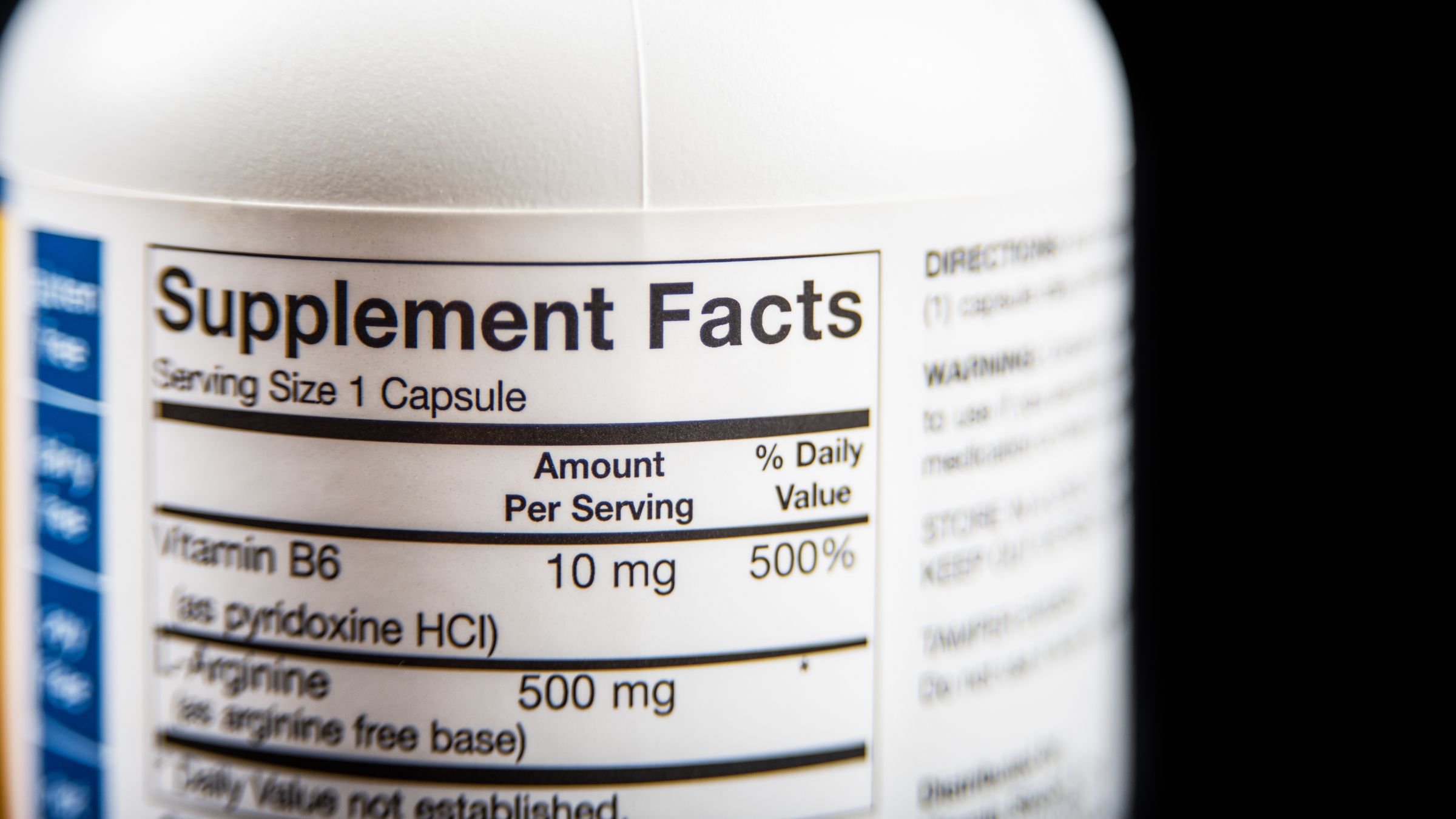
Supplement Label Guide: How to Read a Supplement Label and Focus on What Matters
Standing in a pharmacy aisle or scrolling through an online store, supplement packaging can feel deliberately confusing. Bold claims on the front, a dense table of numbers on the back, and terms like “proprietary blend” or “matrix formula” scattered throughout — it’s a lot. This supplement label guide cuts through the noise so you can focus on the details that genuinely help you compare products and set aside the ones that are mostly marketing. Whether you’re looking at a multivitamin, a magnesium capsule, or an omega-3 softgel, the same core reading skills apply.
Why Supplement Labels Are Structured the Way They Are
Supplement labels follow a regulated format in most countries, but that doesn’t mean they’re easy to read. In the UK, for example, food supplements are governed by the Food Supplements (England) Regulations 2003, and the NHS provides guidance on vitamins and minerals, including what amounts are considered safe. The EU and Gulf regions have their own frameworks, but the basic label anatomy is similar.
There are two distinct sections you’ll encounter on almost every supplement:
-
The front panel — this is marketing territory. Claims here are designed to attract attention.
-
The supplement facts or nutrition information panel — this is where the regulated, comparable data lives.
The front panel and the facts panel are almost two different documents. Train yourself to skip straight to the back.
How to Read Supplement Facts: Start with the Serving Size
The very first line of the supplement facts panel is serving size, and it matters more than most people realise. A product might look like it contains a generous dose of vitamin D, but if the serving size is three capsules and you only take one, you’re getting a third of what the label implies. Some brands use small serving sizes to make the per-serving cost look lower. Others genuinely require multiple capsules to deliver an effective amount. Neither is automatically wrong — but you need to know what you’re comparing.
Always check how many capsules, tablets, or millilitres count as one serving, and how many servings are in the container. A 90-capsule bottle at 3 capsules per serving is actually a 30-day supply, not a 90-day one.
Active Ingredients, Forms, and Amounts
Once you know the serving size, look at the listed supplement ingredients and the amounts alongside them. Two things matter here: the amount and the form.
For the amount, compare it against established reference intakes or, better still, against the amounts used in clinical research for that specific nutrient. A magnesium supplement that provides 20 mg per serving when many studies on magnesium and sleep use 300–400 mg isn’t likely to have the effect someone expects. That’s not a red flag in itself — some nutrients are needed in small amounts — but it is worth noticing.
For the form, this is where supplement labels genuinely diverge in quality. Magnesium oxide is cheap to manufacture but has relatively low bioavailability compared with magnesium glycinate or citrate. Iron as ferrous fumarate is generally better absorbed than ferrous sulfate for many people. Folate listed as methylfolate (5-MTHF) is the active form that some people with MTHFR gene variants cannot convert from standard folic acid. The form isn’t always better — context matters — but it’s worth looking up the specific form for any key ingredient.
Percentage of Daily Value (%DV or %RI)
Most supplement labels include a percentage figure next to each nutrient — this might be labelled %DV (daily value), %RI (reference intake), or %NRV (nutrient reference value) depending on the country. These percentages tell you how much of the recommended daily amount one serving provides.
A few things to keep in mind: these reference values are population-level estimates, not personalised targets. Someone with a confirmed deficiency may need considerably more than 100% of the reference intake under medical supervision. Someone who already eats a nutrient-rich diet may not need to hit 100% from a supplement at all. The percentage is a useful comparison tool, not a prescription.
Also watch for nutrients listed without a %DV — this usually means there’s no established reference intake for that ingredient. It doesn’t mean the ingredient is useless, but it does mean you have less standardised guidance on dosing.
Proprietary Blends: What That Label Term Actually Means
A proprietary blend (sometimes called a “complex,” “matrix,” or “formula”) is a group of ingredients listed together under one name, with only the total combined weight disclosed — not the individual amounts for each ingredient. So a label might say “Adaptogen Complex 500 mg” and then list ashwagandha, rhodiola, and holy basil underneath, but you have no idea if you’re getting 480 mg of one and a trace of the others, or something more balanced.
Proprietary blends aren’t always a scam. Some manufacturers have legitimate reasons for protecting their formulations. But from a consumer standpoint, you cannot verify whether the active ingredients are present at meaningful doses. If a supplement you’re considering relies heavily on a proprietary blend, look for a brand that discloses individual ingredient amounts — this is sometimes called a “fully transparent label” or “open formula.”
You can also look at whether the total blend weight is even large enough to contain effective doses of all the listed ingredients. If ashwagandha typically requires 300–600 mg per dose and it’s one of five ingredients in a 500 mg blend, the maths doesn’t work.
Third-Party Tested Supplements and Quality Marks
Supplements are not as tightly regulated as pharmaceutical drugs in most markets. That means what’s on the label isn’t always what’s in the bottle — contamination, mislabelling, and dosage inconsistencies have been documented. Third-party testing is one of the clearest consumer-facing signals that a brand is taking quality seriously.
Look for certification marks from organisations like NSF International, USP (United States Pharmacopeia), Informed Sport, or Informed Choice. These bodies test products independently and verify that the supplement contains what it claims to contain, at the stated dose, without harmful contaminants. A product with one of these marks has passed an external quality check — that’s meaningful.
If you don’t see a certification mark, check the brand’s website. Some companies publish third-party certificates of analysis (COAs) for each batch. If a brand has no third-party testing of any kind and can’t point you to any testing documentation, that’s a genuine concern.
Allergens, Additives, and the “Other Ingredients” List
Beneath the main supplement facts panel you’ll usually find an “other ingredients” or “excipients” list. This includes fillers, binders, coatings, flow agents, and any allergens. For most people, these are not a concern — many excipients are inert and safe. But if you have specific allergies or intolerances (gluten, soy, dairy, shellfish are common ones), this is the section to read carefully.
Some additives are worth knowing by name: magnesium stearate is a common flow agent that’s generally safe in supplement quantities despite occasional online concern. Titanium dioxide is a whitening agent that some people prefer to avoid — it’s banned as a food additive in the EU but still appears in supplements. Silicon dioxide, microcrystalline cellulose, and hypromellose are standard and unproblematic for most people.
If you prefer minimal additives, look for labels that list fewer excipients and are clear about what each one is. “Natural flavours” is a broad category that may or may not suit everyone’s preferences — brands that specify the source are more transparent.
Find Supplements That Fit Your Routine
Reading labels is only half the picture. Knowing which supplements are actually relevant to your lifestyle, diet, and goals is the other half. CarePlus offers a personalised approach to supplementation — a short quiz (about 5 minutes) that helps match you with options suited to your specific needs, not a one-size-fits-all stack.
Common Label Red Flags and Marketing Claims Worth Ignoring
The front of a supplement bottle is a marketing document. Here are the claims that should register as noise rather than signal:
-
“Boosts immunity” / “supports brain health” / “promotes energy” — These are structure/function claims that don’t require clinical proof. Almost any nutrient can be tied to a body function with enough creative writing.
-
“Maximum strength” or “ultra potent” — These are entirely unregulated terms. Maximum compared with what?
-
“All natural” — Natural doesn’t mean safe or effective. Many natural compounds are harmful at certain doses; many synthetic ones are safe and well-studied.
-
“As seen in [publication]” — A brief mention in a magazine feature is not the same as clinical evidence.
-
Before-and-after photos or testimonials — Individual results vary enormously and tell you nothing about what you should expect.
-
“No fillers” — Sometimes true, sometimes marketing. Cross-reference with the other ingredients list.
None of these claims make a product bad — they just make them uninformative. A good supplement will let the facts panel speak for itself.
A Step-by-Step Checklist for Comparing Supplements
When you’re evaluating any supplement, work through these questions in order:
-
What’s the serving size, and how many servings are in the container? Calculate the actual per-serving cost and day supply.
-
What are the active ingredients, and what are the specific forms? Look up the form for any key nutrient you’re taking for a specific reason.
-
Are the amounts meaningful? Compare against established reference intakes or research-supported doses where available.
-
Are there any proprietary blends? If yes, are the total amounts large enough to contain effective doses of all listed ingredients?
-
Is there third-party testing? Look for certification marks or published COAs.
-
What does the “other ingredients” list say? Check for allergens and any additives you prefer to avoid.
-
What claims are on the front panel? Note them, then set them aside when making your decision.
This process takes five to ten minutes per product once you’ve done it a few times. It becomes second nature quickly.
How This Applies to Personalised Supplementation
One of the practical challenges with label reading is that it assumes you already know which supplements are relevant for you. Someone buying a general multivitamin and someone managing a confirmed iron deficiency under medical guidance are reading labels for completely different reasons. The checklist above applies in both cases, but the context changes what you’re prioritising.
For general wellness, matching supplement choices to your actual diet, lifestyle, and health goals matters as much as label quality. A high-quality supplement you don’t need is still a supplement you don’t need. That’s where personalised supplementation approaches can be useful — they start with your context before recommending specific products.
If you’re managing a health condition or taking prescription medication, always check with a healthcare provider before adding supplements. Some nutrients interact with medications — vitamin K and blood thinners, for instance, or high-dose iron and certain antibiotics. Label reading is a skill, but it doesn’t replace clinical advice when there’s a medical dimension.
For more on how specific nutrients work and what current evidence says about common supplements, the CarePlus vitamins and minerals guide covers individual nutrients in more detail. And if you’re curious about how dietary patterns interact with supplementation needs, our nutrition and wellness section has further context.
Frequently Asked Questions
What should I look for on a supplement label?
Start with the supplement facts panel rather than the front of the packaging. Check the serving size first, then the active ingredients, their specific forms, and the amounts listed. Look for a percentage of daily value or reference intake to contextualise the dose. Check the other ingredients list for allergens or additives you want to avoid. Finally, look for any third-party certification marks like NSF, USP, or Informed Sport — these indicate independent quality testing.
What does proprietary blend mean on a supplement label?
A proprietary blend groups multiple ingredients together under a single name and discloses only the total combined weight, not the individual amounts of each ingredient. This makes it impossible to verify whether any single ingredient is present at an effective dose. Not all proprietary blends are deceptive, but they do limit transparency. If a product relies heavily on proprietary blends, look for a brand that discloses individual ingredient amounts, sometimes described as a “fully transparent” or “open label” formula.
How do I know if a supplement is high quality?
The most reliable indicator is third-party testing from a recognised body such as NSF International, USP, Informed Sport, or Informed Choice. These organisations independently verify that a product contains what it claims, at the stated dose, without harmful contaminants. Beyond certification, look for full ingredient disclosure, clearly stated ingredient forms, and a brand that publishes batch-specific certificates of analysis. Price alone is not a reliable quality indicator in either direction.
Are supplement claims on the front label reliable?
Generally, treat front-label claims as marketing rather than evidence. Claims like “supports immunity,” “promotes energy,” or “maximum strength” are largely unregulated and don’t require clinical substantiation in most markets. They may be technically accurate in a very broad sense — a B-vitamin complex can legitimately say it “supports energy metabolism” — but they’re designed to attract attention rather than inform. The supplement facts panel on the back is where the regulated, comparable information actually lives.


Pingback: Can You Take Too Many Vitamins - Care Plus
Pingback: Sports Supplement Safety for Amateur Athletes - Care Plus